
The Natural Bliss of Being
Jackson Peterson
Since this book focuses on the topic of enlightenment,
it’s probably best if we begin by defining the word enlightenment.
There are many definitions to choose from,
depending on the tradition or culture discussed.
For our purposes,
we will use the definitions that are associated most with
Buddhism, Hinduism, and Eastern philosophy in general.

Enlightenment as a word is best described by understanding
the meanings contained within the word itself:
a condition wherein light has been brought to a topic or state of mind.
In this case,
light refers to insight, understanding, or wisdom.
For our purposes,
enlightenment means a profound and deep insight
that has illuminated our sense of who we are in the grand scheme of things,
spiritually, morally and socially.
Along with this enlightenment
comes a freedom from the darkness of not knowing who we are,
which is discovered to be the reason for our suffering,
sense of personal alienation, and general discontent.
Another term for enlightenment is appropriately known as self-realization.
We come to realize who and what we actually are.
Most of us seek happiness and fulfillment through
relationships, achievements, and acquisitions.
Yet
we never seem to find any lasting stability in our quest.

It is this unending quest that Eastern traditions have described
by the word samsara,
which invokes an image of “running around in circles”
like a hamster on a wheel that goes faster and faster but gets nowhere.
Ultimately this effort only produces more suffering and dissatisfaction.
We run around everywhere in pursuit of happiness and fulfillment
but we fail to ponder the possibility that
what we seek is already fully complete within ourselves.
This is not to say in an egotistical way,
“Oh boy! I have everything I need within myself!”
but rather to say
“Oh my, who I thought I was now includes everyone and everything!”

This occurs through a shift in personal identity,
from being a defined and limited “self” to being an
undefined, living matrix of possibility and interdependent wholeness.
By this recognition,
a natural joy and sense of oneness with creation abides…
that seems to be energized by existence itself.
We discover that our suffering and discontent was not based on
a failure to attain what we desired but rather
on not understanding the “seeker.”
When we don’t know who we are in relationship to life in its broadest definition,
we try to assuage that existential angst or sense of separateness
by engendering a continuous stream of ego gratifications
to distract us from our basic dilemma.
For some,
great success in the game of ego gratification attends,
but at some point when a person feels he or she “has it all,”
the game no longer acts as a distraction.

The person feels an existential emptiness in all he or she has “achieved.”
Again,
the cause of our suffering is not our failures regarding life’s challenges, but
in not understanding who we are and what our relationship to life is.
There is no doubt that we exist in some fashion,
but there is a lot of doubt about whom and what we are.
Many excellent teachers today point out the importance of seeing through our thoughts
and to disbelieve the messages they offer, especially negative thoughts.
Others talk about liberating ourselves from the endless stories that our minds weave
through thought, imagination, and belief, causing anxiety and emotional suffering.
This is often taught as
learning to not believe what our thoughts are telling us,
especially the negative thoughts that create
anxiety, worry, and depressed emotional states.
This is great advice to be sure,
and all of us need to be cognizant of how we depress ourselves or create anxiety
through our own apparently volitional, thought processes.
We often dwell on potential negative future outcomes or
irreparable events from the past with regret and shame.
To learn that we can liberate ourselves from uncomfortable emotional states
through recognizing our negative thinking patterns is invaluable.
But
before we can think in terms of liberating ourselves from negative emotional states,
we first have to understand their origin.
As the Buddha pointed out correctly two thousand five hundred years ago,
what we are is the result of our thoughts.
Some have said we are the result of our experiences,
but I would add that we are the result of what we think about our experiences.
So that means that how we are feeling, our current emotional state,
is dictated by our thoughts.
If that’s true,
then we need to find this out for ourselves.
The best way to do that is to examine the nature of our thoughts.
The entire pursuit of spiritual traditions that consider enlightenment as their goal
is the clarification of what this observer or aware quality of the mind is all about.
Some questions to consider:
Is the observer of thoughts – a thought itself?
Is this observing awareness a function of the brain,
Or
is it something that exists independent of the body and brain?
Since it can observe thoughts as though independent and separate from thoughts,
does that mean this observing awareness is not conditioned by the mind’s activities?
As we examine the nature of this awareness
we find no fixed qualities other than this capacity to observe.
It’s always in the now, observing.
Even when we are engaged in memories,
that which is observing the memories of “then” is in the current moment of now.
We sometimes say that when we are engaged in a memory,
our mind is absorbed in the past.
But the memory is occurring now,
as a freshly created mental image based on past experience,
and the observer of that memory is always in the present.
We can also notice that quality of changeless observing
when regarding thoughts of the future.
Awareness is always in this current moment;
there is no other option.

Many elderly people have shared that
they feel they are the same person as when they were young.
Our roles may change,
but the awareness that is experiencing those roles does not.
Undefined beingness has a permanent quality of awareness.
If we recognize fully what that beingness is,
in all its spiritual ramifications, and as seen from that perspective,
we would be enlightened.
Most basic is our sense of existing as a being.
That quality of being or existing does not appear to depend on
anything material in terms of how we look, feel, or act.
It also isn’t affected by our mind or how we think of ourselves.
The phrase “I think, therefore I am”
does not reveal what precedes the thinking.
We don’t know we exist simply because we think;
we know we exist because we are aware.
Thinking is no more a validation of existence than the five perceptual senses.
So thinking is not the proof.
The awareness that we are thinking, feeling, or perceiving is our proof of being.
Awareness is more fundamental.
To be – is to be aware. To be aware is to be.
Awareness is intrinsic to our being.
If we spend any time contemplating or just noticing our
mental processes we may notice that in moments of stillness,
free of thoughts, there is a naked and clear sense of
aware beingness.
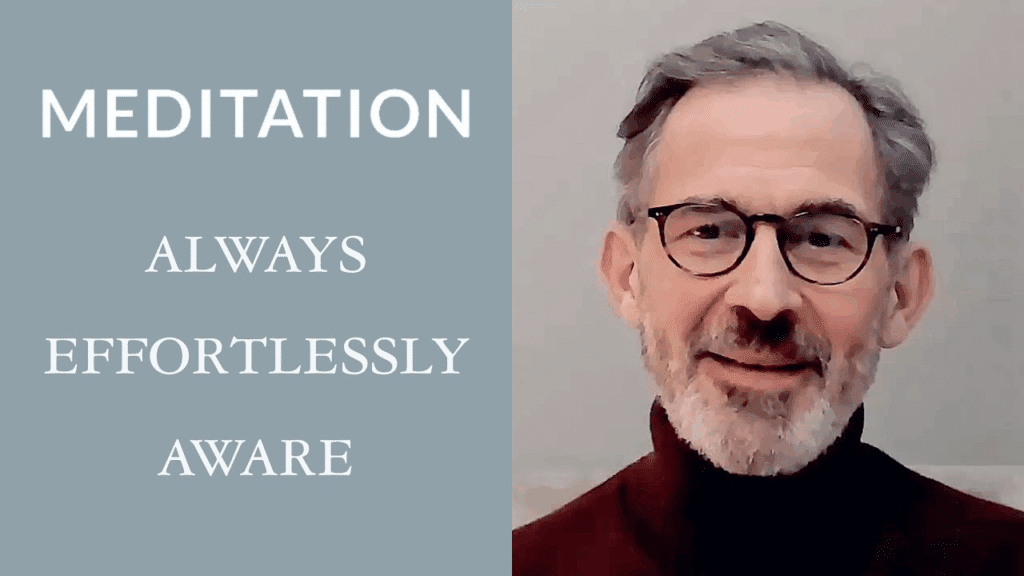
From that basic sense of being we easily notice that
it is always aware.
We also notice that there appears to be a power of attention
with which we create the style of our experience.
For example,
we can direct our attention to negative thoughts,
and by focusing further on negative thoughts
we develop negative moods and emotions.
We can also focus our attention on positive thoughts
and experience positive moods and emotions.
Attention is a power of awareness.
The power of attention reaches into
the physical world of experience too.
By focusing our attention on achieving some goal in life
we actualize that initial thought into reality.
Literally all that we achieve through effort in life
is directed by our power of attention.
So,
being has the quality of awareness.
Awareness has the power of attention.
Attention then is the conduit of intention,
which is the creative pulse that arises from being
and enlivens the creative process of living in the world.
Intention first manifests as thought, the idea to be intended.
Action arises from the intention to do something.
The lesson ultimately is that by simply remaining in the condition of
being a detached observer to negative emotional states as they first arise,
you won’t become your own victim.
When you are so full of thoughts it is sometimes better to
focus on the body or sensory experience instead of the mind.

I recommend focusing on your breathing.
While sitting or lying, just focus on noticing the experience of the breath
passing through the nostrils and then follow how the breath fills the lungs.
As the in-breath is at its natural fullness,
notice how it begins to exit through the nostrils
and the sensations when the chest begins to empty and relax.
As you exhale,
slow the breath down and lengthen the exhalation into full relaxation.
Pause before inhaling again.
During the pause,
notice the experience of relaxation for a brief moment.
Then start the cycle again.
Do this for about five minutes or until you feel more relaxed.
Then practice the “observing thoughts exercise” again.
Question:
Is the goal of these practices to get rid of all thoughts and thinking?
Answer:
No, not at all.
Thoughts are the natural expression of the mind.
However,
most of us don’t notice how we create our own uncomfortable states of mind
through our apparently volitional thinking process.
We blame the environment or the people around us.
We completely miss our own involvement through thinking, judging, and
attempting to manipulate our world to be as we prefer.
However,
as we become more and more aware of our natural condition as
being this observing awareness,
we are less identified with our thoughts automatically.
Since we are more developed in the mode of
being an observer of inner and external experiences,
thoughts appear less contracted and solid.
We can begin to see through the haze of our thoughts and stories.
We notice our sensory perceptions to be more vivid and alive.
Colors appear more intense and sounds seem crisper.
Its not that our senses are functioning any better,
but our attention is relaxing into a state of non-fixated openness.
As we relax into this new openness more and more,
the mind’s frenetic activities begin to slow down,
and eventually a natural stillness of mind may arise.
A creative and playful intuitiveness arises that seems to
replace much of the compulsive think-and-worry mode that we experience so often.
It is this carefree state of mind that makes living fun and less “effortful.”
Life seems to flow without needing to be forced one way or another.
It may seem that awareness is separate and apart from thoughts,
appearances, and experiences as being an independent observer.
This would be a dualistic view,
a view that is counter to what all the enlightened teachers teach.
But before we can know the non-duality of awareness and experience, we first need to
explore our immediate experience just as it appears from our dualistic perspective.
Initially we need to differentiate our observing awareness
from the mind’s dualistic activities as expressed through thought.
This brings about a “dis-identification” of the mind’s projections
and its essential nature as changeless awareness.
This is like the mind believing our identity is our physical body
or mentally conceived self-image.
We come to discover that we are not the body or psychological self-image.
As we proceed,
this dualistic sense of separation also gradually disappears,
revealing a oneness of all and everything.
As our mind becomes less contracted into compulsive thought and worry,
our space of awareness feels more open and free.
Our narrow borders of self-definition begin to yield to a growing sense of
connection to all of life and our world of experience.
By becoming more aware of our own undefined and immaterial state of beingness,
we are becoming more familiar with that aspect within ourselves that is
changeless, perfect, and eternally free.

——————————————————————————-
If interested, please contact Jackson Peterson at:
ejackpete@yahoo.com
Dzogchen and Advaita Vedanta with Jackson Peterson
https://www.facebook.com/groups/2340220392863703
For more information http://www.wayoflight.net/
