Highlights for
The Transparency of Things: Contemplating the Nature of Experience
Rupert Spira
A deeply revealing contemplation of our True Self…
Consciousness.
The purpose of the transparency of things is to
look clearly and simply at the nature of experience
without any attempt to change it.
A series of contemplations let us gently but directly to see that
our essential nature is neither a body nor a mind.
It is the conscious presence that is aware of its current experience.
As such,
it is nothing that can be experienced as an object,
and yet
it is undeniably present.
However,
these contemplations go much further than this.
As we take our stand knowingly as this conscious presence
that we always already are,
and reconsider the objects of the body, mind and the world,
we find that they do not simply appear to this presence …
they appear within it
and further exploration reveals
they do not simply appear within this presence
but as this presence.
Finally
we are led to see that it is in fact
this very presence that takes the shape of our experience from moment to moment
whilst always remaining only itself.
We see that our experience is and only ever been
one seamless totality,
with no separate entities or objects anywhere to be found.
————————————–

The core aspect of all major spiritual traditions is
to enquire deeply into our True Nature.
Who are ‘we’?
Within the first few steps of this ‘Path’, it becomes very obvious that:
‘We’ are not our bodies…
Not our egos, mind, thoughts, likes, dislikes…
‘We’ are very simply…
That which is ‘Aware’… or Conscious.
Just because it sounds simple… yet,
Our pre-programed perspectives of ‘who we think we are’…
Creates an almost impenetrable wall that veils our ‘True Self’.
As an aspirant seeks the full fruition of this ‘Path’…
The deeper the meditations lead towards the ‘wordless Wisdoms’
revealed by deep ‘Insight Meditation’… ‘Jhana‘
One must immerse themselves in their ‘True Nature’…
Advaita Vedanta refers this as the “I Am”.
I am – That which is ‘Aware’… or Conscious.
This is one small but profound aspect into
attaining the ‘breakthrough’ experiences
found in these meditations of ‘Higher Consciousness’…
The ‘Jhana’ states.
No matter how far & deep one goes with this…
Abiding in the “I Am”… our True Nature…
The Witness, Pure Awareness… Pure Conciousness…
It will help you gain those breakthroughs…
And the deeper and longer your experience becomes…
The closer to the ‘Natural State’ of your True Nature you become… simply…
Consciousness
The Parvastha… the ‘after glow’…
You will eventually be inseparably connected consciously with your
Natural State – your True Nature… “I Am”….
Of your True Being… your True Self.
Consciousness.
This book helps explain the ineffable nature of such perspectives of…
Consciousness.
———————————————–
Most spiritual traditions began with an individual having a
transforming mystical experience,
some profound revelation or inner awakening.
It may have come through dedicated spiritual practice,
deep devotion, facing a hard challenge or sometimes
unbidden, out of the blue – a timeless moment
in which personal dramas pale in the light of a deep inner security.
However it came,
it usually led to a delightful joy in being alive,
an unconditional love for all beings,
the dissolving of the sense of self and
an awareness of oneness with creation .
At the leading edge of this progressive awakening
is what contemporary teachers such as Rupert Spira call the Direct Path.
Recognition of our true nature does not need studious reading of spiritual texts,
years of meditation practice or deep devotion to a teacher.
We need only the willingness to engage in a rigorously honest investigation
into the nature of awareness itself –
not an intellectual investigation,
but a personal investigation into what we truly are.

The essential discovery of all the great spiritual traditions is
the identity of Consciousness and Reality,
the discovery that the fundamental nature of each one of us
is identical with the fundamental nature of the universe.
The meaning of the words is not in the words themselves.
Their meaning is in the contemplation from which they arise
and to which they point.
The text, therefore,
is laid out with ample space in order to encourage a contemplative approach.
Clear Seeing
All that is happening in these contemplations is
the clear seeing of the essential nature of experience.
There is no attempt to change or manipulate it,
to create a peaceful or happy state,
to get rid of suffering or to change the world.
There is simply the clear seeing of the true nature of this current experience.
This clear seeing is not an intellectual understanding,
although it may be formulated provisionally in intellectual terms
when required by the current situation.
Rather,
it is the direct, intimate and immediate knowing of ourself
resting in and as the formless expanse of Presence,
and simultaneously dancing in the vibrancy and aliveness
of every gesture and nuance of the body, mind and world .
The clear seeing of what is
has a profound effect on the appearance of the
mind, the body and the world,
but that is not the object of this investigation.
There is no object to this investigation.
Even the purpose of ‘seeing clearly’ turns out to be too much in the end.
It is the thorn that removes the thorn,
and when even this last trace of becoming has been dissolved in understanding,
it too is abandoned, leaving only Being.
We start with experience and we end with experience.
We allow the naked clarity of experience itself
to relieve itself of the burden of duality.
Belief and doubt are two sides of the same coin.
When a belief is exposed
it is found either to be true
(in which case the belief becomes a fact and
the doubt that was implicit in it is dissolved)
or to be false
(in which case both the belief and the doubt will naturally come to an end).
No longer nourished by belief,
these feelings are exposed and seen for what they are.
They die of the fierce clarity of being clearly seen.
This dissolution of beliefs and feelings has a profound effect on our lives,
our ideas, our relationships, our bodies, our work, the world, in fact…
on everything.
However,
the purpose of this investigation and exploration is not to change anything.
It is simply the clear seeing of what is,
and clear seeing is the shrine on which Being shines.
What Truly Is
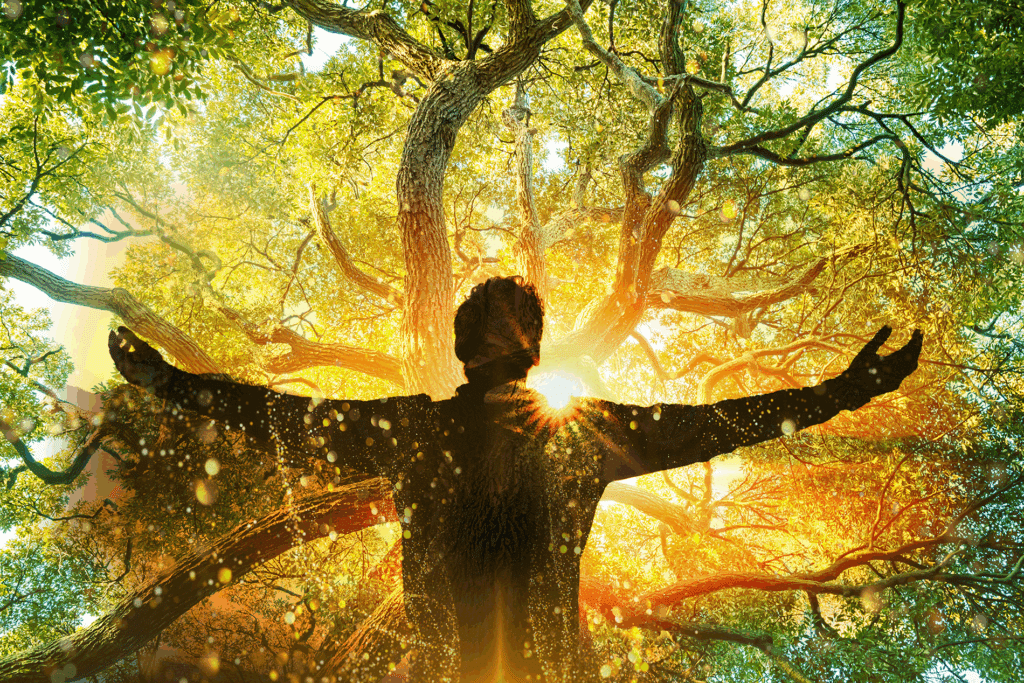
We know that Consciousness is present now,
and we know that whatever it is that is being experienced in this moment
exists.
It has Existence.
If we think we know something objective about ourself or the world,
then whatever that something is that we think we know
will condition our subsequent enquiry into the nature of experience.
So before knowing what something is, if that is possible,
we must first come to the understanding that
we do not know what anything really is.
Therefore,
the investigation into the nature of ourself and the world of objects
initially has more to do with the exposure of deeply held ideas and
beliefs about the way we think things are than with acquiring any new knowledge.
It is the exposure of our false certainties.
Many of our ideas and beliefs about ourself and the world
are so deeply ingrained that we are unaware that they are beliefs
and we take them, without questioning, for the absolute truth.

We believe that we are the subject of our experience
and that everything and everyone else is the object.
We believe that we, as this subject, are the doer of our actions,
the thinker of our thoughts, the feeler of our feelings,
the chooser of our choices.
We believe that this entity we consider ourself to be
has freedom of choice over some aspects of experience
but not others.
We believe that objects exist independently of their being perceived,
that Consciousness is personal and limited,
that it is a by-product of the mind and that the mind
is a by-product of the body.
These and many other such beliefs are considered to be so obviously true
that they are beyond the need of questioning.

They amount to a religion of materialism to which
the vast majority of humanity subscribes.
This is especially surprising in areas of life that purport to deal explicitly with
questions about the nature of Reality, such as religion, philosophy and art.
This in turn implies that if we are to make an honest investigation into the nature of Reality,
we have to discard any presumptions that are not derived from direct experience.
Any such presumptions will not relate to experience itself
and will therefore not relate to ourself or the world.
If we honestly stick to our experience,
we will be surprised to find how many of our assumptions and presumptions
turn out to be untenable beliefs.
In the contemplations that this book comprises it is acknowledged that
the purpose of reasoning is not to frame or apprehend Reality.
However,
it is also acknowledged that the mind has constructed complex and persuasive ideas
that have posited an image of ourself and the world
that is very far from the facts of our experience.
Although this is never our actual experience,
the mind is so persuasive and convincing
that we have duped ourself into believing
that we actually experience these two elements,
that we experience the world separate and apart from ourself,
and that we experience our own self
as a separate and independent consciousness.
All spiritual traditions acknowledge that
Reality cannot be apprehended with the mind.
As a result of this understanding some teachings have
denied the use of the mind as a valid tool of enquiry or exploration.
It is true that Consciousness is beyond the mind
and cannot therefore be framed within its abstract concepts.
However,
this does not invalidate the use of the mind
to explore the nature of Consciousness and Reality.
Ignorance is composed of beliefs,
and belief is already an activity of mind.
If we deny the validity of mind,
why use it in the first place to harbour beliefs ?
We are open to the possibility that there is only one single, seamless totality,
that Consciousness and Existence are one, that there is only one Reality.
In the disinterested contemplation of these ideas and feelings,
their falsity is unraveled.
We see clearly that our ideas do not correspond to our experience.
This paves the way for experience to reveal itself to us as it truly is,
as in fact it always is, free from the ignorance of dualistic thinking.
We begin to experience ourself and the world as they truly are.
Our experience itself does not change but we feel that it changes.
Reality remains as it always is, for it is what it is,
independent of the ideas we entertain about it.
However,
our interpretation changes,
and this new interpretation becomes the cornerstone of a new possibility.
This new possibility comes from an unknown direction.
It does not come as an object, a thought or a feeling.
It is unveiled, in most cases,
as a series of revelations, each dismantling part of the previous
edifice of dualistic thinking.
And the unfolding of this revelation, in turn,
has a profound impact on the appearance of the
mind, the body and the world.
Consciousness veils itself from itself
by pretending to limit itself to a separate entity,
and then forgets that it is pretending.
Nothing new is created by this process of exploration.
Its purpose is not enlightenment or ‘self – realization’.
It is simply to see clearly what is.
Our beliefs are the root cause of psychological suffering,
and they are dismantled by a process of contemplative investigation.
Everything Falls into Place

I, this Consciousness that is seeing these words
and experiencing whatever it is that is being experienced in this moment,
is not located inside a mind.
The mind is not located inside a body,
and the body is not located inside a world.
The body is simply the sensation of the body, and the world is
simply the perception of the world.
Take away sensing and perceiving from the experience of the body and the world,
and what objective qualities are left of them
None!
Sensations and perceptions are made out of mind – that is,
they are made out of sensing and perceiving.
There is no other substance to them than sensing and perceiving.
If there were another substance, independent of sensing and perceiving,
that constituted the body and the world,
that substance would remain after sensing and perceiving had been withdrawn.
However,
nothing objective remains of the experience of the body and the world
when sensing and perceiving have been withdrawn.
And
if we look clearly at the substance of mind, the substance of perceiving and sensing,
we find that it is none other than the Consciousness in which it appears.
The mind, the body and the world are located inside Consciousness
and are made only out of Consciousness.
That is our experience.
If there is no experiential evidence to suggest that Consciousness is limited,
on what grounds do we believe that it is personal?
Why do we think that we, Consciousness,
are a personal entity inside the body?
Consciousness is transparent, colourless, Self – luminous,
Self – experiencing, Self – knowing, Self – evident.
That is our experience in this moment.
Consciousness cannot be known by the mind. The mind is an object.
It does not know anything.
It is itself known by Consciousness.
If we have no experience of a limit or a boundary to Consciousness,
if we have no experience of a personal Consciousness,
how do we know that the
Consciousness ‘in you’ and the Consciousness ‘in me’ are different?
There is no evidence in our experience to suggest that
we have different Consciousnesses, or indeed that
there is more than one Consciousness.
Mind can know nothing of Consciousness and yet, at the same time,
all that is known through mind is the Knowingness of Consciousness.

Like a landscape that appears gradually out of the mist
without our doing anything to bring it about,
so it becomes more and more obvious, without our doing anything about it,
that we, Consciousness,
have only ever been experiencing our own unlimited Self
and that the experience of the world is the revelation of our own
infinite and eternal Being.
The very best that the mind can do is to explore its own limits and come to the conclusion
that it does not and cannot know what anything really is.
How can that which is the cause of all things be said to have a cause?
What could cause Consciousness,
if everything that might be a candidate for being such a cause
is itself caused by Consciousness?
Consciousness is its own cause,
which is the same as saying that it is causeless.
Abide As You Are
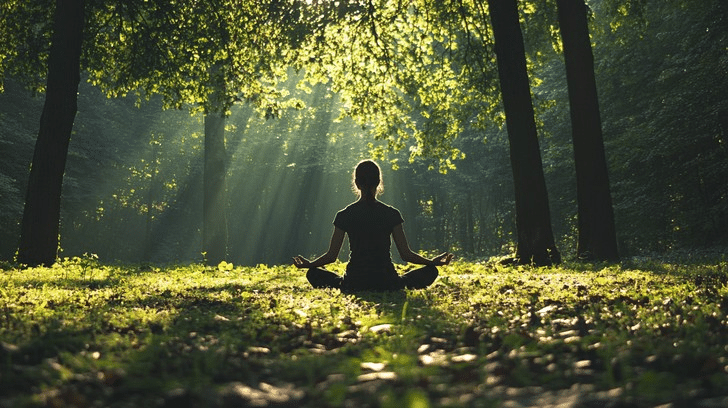
Our objective experience consists of thoughts and images,
which we call the mind; sensations, which we call the body;
and sense perceptions, which we call the world.
In fact,
we do not experience a mind, a body or a world as such.
We experience thinking, sensing and perceiving.
All that we perceive are our perceptions.
We have no evidence that a world exists outside our perception of it.
We do not perceive a world ‘out there’.
We perceive our perception of the world,
and all perception takes place in Consciousness.
There is no need to make this witnessing Presence conscious.
It is already so.
There is no need to make it peaceful.
It is already so.
There is no need to wake it up.
It is always already awake.
There is no need to make it unlimited and impersonal.
It is already so.
And there is no need to make the mind, the body and the world peaceful.
They are always moving and changing.
We remain as we are and we allow the mind, the body and the world to be as they are.
As we do so,
the mind, the body and the world gradually return to their true place
and their nature is revealed.
We see that in fact they never left their true place,
that they were never anything other than what they truly are.
We simply stop imagining that they are distant, separate and other and,
as a result,
they stop appearing as such.
The same is true of Consciousness.
Whatever is being experienced in this moment is taking place within Consciousness,
and Consciousness itself remains as it is at all times,
unmodified, unchanged, unconcerned.
Consciousness is what we are, and to be as we are
is the highest form of meditation.
All other meditations are simply a modulation of this
meditation of abidance as we are.
To begin with,
meditation may seem to be something that we do,
but later we discover that it is simply what we are.
It is the natural condition of all beings.
It cannot be brought about, because it is already the case.
It cannot be attained, because it is what we always already are.
It cannot be lost, for there is nowhere for it to go.
We simply allow everything to be as it is.
As we allow everything to be as it is, we are, unknowingly at first,
taking our stand in our true nature.
In fact,
we have never left our true nature,
but now we begin to reside there knowingly.
At some stage it dawns on us that ‘I’ does not abide in its true nature.
Who is there to abide in something other than itself?
It simply is that.
We simply are that and always have been.
Even to say ‘always’ is not quite right, because ‘always’
implies an infinite extension in time.
The idea of an infinite extension in time appears in the ‘I’, in Consciousness,
from time to time, but the ‘I’ never appears in an infinite extension in time.
It just is. ‘I’, Consciousness,
just am.
The Drop of Milk
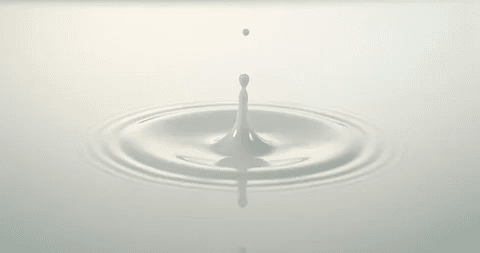
That which is known cannot be the Knower,
and the Knower cannot be known objectively.
Consciousness pretends to be other than it is and then, as that apparent other,
it looks for itself.
Of course,
it can never find itself as an object because it already is itself,
just as the eye cannot see itself.
However,
it does not need to find itself because it already is itself.
All that is required is to stop pretending that it is not itself.
The mind does not find Truth. It does not find Reality.
It is dissolved in it.
Consciousness Shines in Every Experience
Meditation is not an activity.
It is the cessation of an activity.
In the final analysis,
nothing that is absolutely true can be said of meditation,
not even that it is the cessation of an activity,
because meditation takes place or, more accurately,
is present beyond the mind, and the mind, by definition…
has no access to it.
With each new layer of contraction
this open, free, unlimited Consciousness
forgets its own unlimited nature more and more profoundly,
and in doing so
throws a veil over itself.
It hides itself from itself.
In spite of this there are frequent intrusions into its own self-generated isolation
which remind itself of its real nature …
the smile of a stranger, the cry of an infant, an unbearable grief,
a brief desireless moment upon the fulfilment of a desire, a moment of humor,
the peace of deep sleep, a pause in the thinking process, a memory of childhood,
the transition between dreaming and waking, the recognition of beauty,
the love of a friend, a glimpse of understanding.
This open, free, unlimited Consciousness is, without knowing it,
doing this very activity of separation.
This activity defines the ‘person’, the ‘separate entity’.
The separate entity is something we, as Consciousness, do.
It is not something we are.
Even when Consciousness has veiled itself in a cloak of
beliefs, doubts, fears and feelings, the taste of its own
unlimited, free and fearless nature is embedded within every experience,
and this taste is often experienced as a sort of nostalgia or longing.
This longing is often wrongly associated with an event or a time in our lives,
often in childhood, when things seemed to be better,
when life seemed to be happier.
However,
this longing is not for a state that existed in the past –
it is for the peace and freedom of Consciousness
that lies behind and is buried within every current experience.
What was present ‘then’ as ‘happiness’
was simply the unveiled presence of this very Consciousness
that is seeing and understanding these words.
Consciousness projects this current experience out of itself.
It then loses itself in this projection,
in the mind / body / world that it has projected from within itself,
and identifies itself with a part of it.
It is as if it says to itself, ‘I am no longer this open, free, unlimited Consciousness.
Rather,
I am this limited fragment that I have just created within myself.
I am a body.
In doing so Consciousness forgets itself.
It forgets its own unlimited nature.
This forgetting is known as ‘ignorance’.
It is Consciousness ignoring itself.
From the point of view of ignorance,
the ‘person’ is what we are and
‘meditation’ is something that we do from time to time.
From the point of view of understanding, ‘meditation’ is what we are
and the ‘person’ is something that we do from time to time.
Meditation is not something that we do.
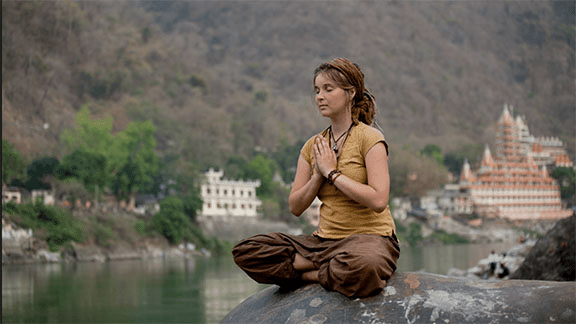
Whether we know it or not,
it is what we are.
Ego
Ego is not an entity. It is an activity.
It is an optional activity of identifying itself with a fragment
that Consciousness is free to make or not, from moment to moment.
This thought and feeling arises within Consciousness
and is an expression of Consciousness.
It is the activity of Consciousness pretending to be a body and a mind,
then forgetting that it is pretending and, instead,
actually thinking and feeling that it is a body and a mind.
Even if the world out there is an illusion, that illusion is still known.
It is experienced.
The appearances that constitute our objective experience are changing all the time,
but throughout the changing succession of appearances,
Knowing or Experiencing is continuously present.
Knowing or Experiencing does not change with every changing appearance.
Knowing or Experiencing does not flow with the flow of appearances.
It is present and changeless throughout.
This Knowingness, this Experiencing-Ness,
that is present within every experience,
is the light of Consciousness.
It illumines every experience.
This Knowingness is known as ‘I’.
It is our most intimate Self.
‘I’, identity, is Knowingness.
Knowingness is not what I do.
It is what I am.
If we separate Experiencing from an object,
be that object a thought, a sensation or a perception, the object vanishes.
However,
Experiencing remains, experiencing itself.
Nothing exists outside our experience of it,
as far as we know.
Ego is a mode of functioning. It is an activity, not an entity.
It is ignorant only in the sense that
it occurs when Consciousness ignores itself.
We can still function very well in the apparent world of time and space
without the sense of being a separate entity.
In fact,
free of the limiting notions of being a separate entity,
and the desires and fears that are required to maintain this position,
life becomes free, alive and vibrant.
Experience is relieved of the demand to produce Happiness for a nonexistent entity,
and flowers as a result.
Relationships are relieved of the demand to produce love,
and love shines in them naturally as a result.
And when there is no engagement with the body, mind or world,
the default position of Consciousness is not to
shrink back into the isolated cell of a self-contracted entity,
not to collapse back into a person.
It is to remain as it is,
transparent, luminous Presence, open, empty, silent and available,
ready to take its shape as the totality of experience at every moment.
Consciousness Is Its Own Content
Similarly,
the content of appearances is Consciousness, and when the appearances disappear,
their content does not.
So the content of Consciousness is Consciousness itself.
Consciousness is its own content.
It never becomes anything else.
This can be reformulated in a way that is closer to our actual experience by saying that
the content of everything is Consciousness
and this Consciousness is what we intimately know ourself to be.
Consciousness is our own Reality and the Reality of all appearances.
In this way,
each formulation of Truth reveals the limitations of and
replaces less complete formulations that precede it,
and is then itself exposed and replaced by a formulation
that is closer to direct experience.
One who is fearful of leaving his home
projects all sorts of unpleasant things onto the outside world
in order to justify his desire to remain indoors.
Everything he sees and hears of the outside world
seems to justify his attitude towards it,
and it will be very difficult to persuade such a person that it is in fact
his attitude of fear
that causes the world to appear in a certain way,
rather than being the result of the way the world inherently is.
In the same way,
Consciousness becomes accustomed to thinking and feeling that
it lives inside the body / mind,
and it substantiates this habit with layer upon layer of belief and feeling.
Once it has taken this position,
its experience seems to substantiate the truth of its beliefs and feelings.
However,
such is the nature of maya,
the creative display of manifestation, that the opposite is also true:
when Consciousness begins to relieve itself of its
exclusive identification with a body / mind,
it receives all sorts of confirmations from the world that it is on the right track.
The ego (Consciousness pretending to be a separate entity)
is a past master at appropriating whatever is available in order to perpetuate itself,
and for this purpose ‘Truth’ will suffice as well as anything else.
In some ways it is the ultimate security because it cannot be trumped.
Suffering is already a rejection of the current situation,
a lack of acceptance of the current situation as it is.
This rejection is the counterpart of Consciousness’s exclusive identification
with a body / mind.
That is what suffering boils down to.
If our credo is, ‘Everything is Consciousness, therefore
everything is as good as anything else, therefore
I cannot and need not change my suffering’,
then why not apply that attitude to the current situation in the first place
and welcome it exactly as it is?
Instead of accepting our rejection of the current situation,
why not simply accept the current situation itself?
Suffering would cease right there.
This so-called acceptance of the rejection of the moment is not the
true, impartial, benevolent welcoming of everything within Consciousness.
It is fear dressed up as understanding, pseudo – Advaita.
As such,
it is the very activity of ego itself, perpetuating its own isolation and misery.
In fact,
we could say that ego is the taste of Peace and Happiness itself,
mixed with the belief and feeling that Peace and Happiness are not present.
In the traditional Vedantic teachings the veiling power of appearances
is sometimes emphasised and, because of this,
appearances are sometimes considered to obscure the background of Consciousness.
In this tradition,
maya, appearance, is translated as the word ‘illusion ,
with a slightly negative connotation.
However,
it is not the appearance that is illusory.
It is its apparent independence and separation from Consciousness that is illusory.
In the Tantric approach
these very same appearances are understood
to reveal and express the background itself, and therefore,
in this tradition
maya is seen as a creative display of energies that derives from their source
and thus
leads back to it.
Precisely the same appearances can be said either to veil or to reveal their source,
depending on the level or point of view from which we look at them.
Knowingness Is the Substance of All Things
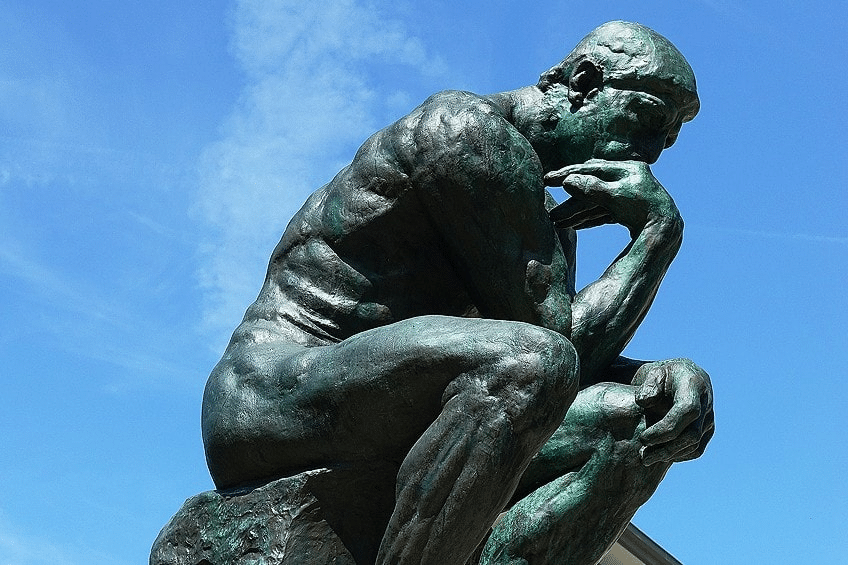
The desire to experience Consciousness as an object
comes from the belief that Consciousness is not already present.
This belief is fueled and substantiated by a deep sense of lack at the level of the body,
the feeling, ‘I want something. I need something.’
Every time this sense of lack is relieved by the acquisition of a desired object,
Consciousness briefly glimpses itself, and this experience is known as
Happiness.
In fact,
it is not a brief moment. It is a timeless moment.
However,
it is not the acquired object that causes the Happiness.
It is the dissolution of the sense of lack,
which is apparently brought about by the acquisition of the object,
that allows the pre-existing Happiness to be revealed.
So
the relaxation of this desire to experience Consciousness an object,
which actually prevents us from abiding as Consciousness knowingly,
requires more than simply the understanding that
Consciousness is not an object.

It requires a deep sensitivity to the sense of lack,
to the feeling that we need something that is not present
in order to make us happy,
to the feelings and impulses at the level of the body
and how we escape them through thinking.
Once this is understood,
we no longer need the acquisition of an object to dissolve the sense of lack .
We go directly to the sense of lack itself and face it as it is.
We do not act on the impulse and escape it through thinking, desiring and acting.
We have the courage to face it.
We have the courage not to try to relieve it, not to do anything about it.
We simply allow the feeling of lack to be fully present.
We do not add anything to it.
That is easy because we, Consciousness,
are already the allowing or welcoming of all things.
We simply let Consciousness take care of everything.
The clear seeing of these feelings reveals that
they are in fact no more than neutral bodily sensations
with no inherent power to generate thinking, desiring or fearing,
let alone a sense of lack or separation.
This downgrading of feelings to bodily sensations in our understanding
is accomplished effortlessly through clear seeing.
We do not do anything to the feelings.
In fact,
we stop doing something to them.
We stop investing them with the power to veil Reality.
We stop investing them with the power to generate unhappiness
and its attendant seeking.
As soon as we stop superimposing feelings onto bodily sensations,
they cease to be an abode of ignorance and confusion,
and are revealed instead as a beautiful display of creative energies
dancing in the emptiness of Presence,
revealing its fullness moment by moment.
Of course,
desires continue to arise,
but their purpose is no longer the avoidance of feeling
nor the attainment of Happiness.
Their purpose is to express Happiness.
Their purpose – in fact, their nature – is to
manifest , share and celebrate Happiness.
Our True Body
Experience always takes place now, in the present,
so if we want to explore the nature of Reality,
all we have is this current experience.
In this current experience we have all the information that is needed
to understand the nature of ourself and of Reality, because both we,
whatever we are, and Reality, whatever it is , are present.
All that is necessary is to stick very closely to our actual experience
and not rely on concepts or ideas from the past about the way we think things are.
We have to come very cleanly to this exploration of experience
and only permit that which we know for ourself to be true.
By contrast,
in these contemplations we focus on the subjective aspect of experience
rather than the objective aspect.
We give our attention to the Perceiver rather than the perceived.
So,
having mistakenly identified ‘I’, Consciousness, with the body / mind
and come, as a result, to know our Self as something,
we now come to understand our Self as the witness,
as nothing objective.
Consciousness, ‘I’, the subject, is already at rest. It is already peaceful.
In fact,
it is Peace itself.
Peace is inherent in Consciousness.
The agitation of the mind, the body and the world appear in Consciousness,
but Consciousness is not agitated by them.
It is our experience that Consciousness, that which we know our Self to be,
is always present, always remains as it is, unchanging and unmoving,
and always impartially welcomes into itself the totality of our objective experience,
irrespective of the nature of that experience.
Taking our stand as this ever-present Consciousness,
we can look again at our experience and see that
we never actually experience the mind, the body or the world
in the way that we usually conceive them.
The idea that there is a mind which contains memories, hopes, fears and desires
is itself simply a thought that appears from time to time,
like any other thought, in Consciousness.
There is no mind as such.
The existence of a mind is simply an idea, a concept.
It is a useful concept, but it is not a fact of experience.
Our true body is open, transparent, weightless and limitless.
It is inherently empty and yet contains all things within itself.
That is why such an empty body is also inherently loving.
It is the welcoming embrace of all things.
I Am Everything

In order to draw attention to the presence and primacy of this witnessing Consciousness,
we can divide the seamless totality of our experience into
a perceiving subject, Consciousness, and a perceived object, the body, mind and world.
The transparent, luminous, empty, Self-knowing nothingness of Consciousness
takes the shape of the totality of our experience.
It knows itself as everything.
Consciousness is always only itself and yet,
in exclusively identifying itself with an object, the body / mind,
it seems to become something.
It seems to become an object.
In disidentifying itself from the object,
it realizes itself as the subject. It realises itself as nothing, as empty.
That is,
it realises that it is not an object, not a ‘thing’.
As it reconsiders the object from the position of subject,
it realises that the subject – that is, itself –
goes into the make of the object.
It realises itself as everything.
This condition could be called Love.
It is the natural state in which the nothingness of the witness
is liberated from any objectivity or limitation and realises itself to be
the very substance of everything.
Consciousness knows itself as everything.
It goes beyond subject and object.
Subject and object collapse into that which is behind, beyond and within both.
We could call this Being.
Consciousness becomes something, then nothing, then everything, and yet
always remains itself.
Consciousness is known as the perceived, then the perceiver, then the perceiving,
and yet throughout this process,
Consciousness remains always only itself.
Consciousness never goes anywhere.
Consciousness never becomes anything.
There is only Consciousness, there is only Being,
which simultaneously creates, witnesses, expresses and experiences itself
in every experience we have.
What We Are, It Is
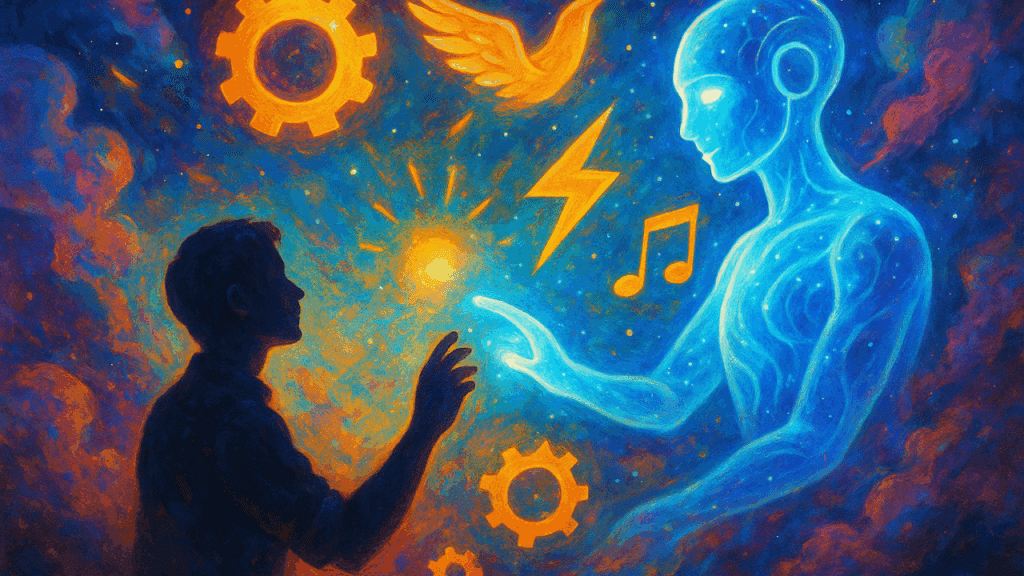
We may not know what this ‘something’ is, yet
there is no doubt that something is being experienced.
It may be an illusion, a dream or a hallucination, and yet
still it is something.
It has Existence. It has Being. It has Reality.
What has been stated so far could be formulated simply as, ‘I, the subject,
experiences it or that, the object’.
It is the common view of experience.
If we take the subjective aspect of experience first,
we see that it is impossible to know anything objective about it,
about ‘I’, about Consciousness.
The simple reason for this is that anything that is known
is by definition an object.
Anything we think we know about the subject
is immediately transferred to the status of ‘object’.
It becomes the known, not the Knower.
So we are left with the understanding that when experience is divested of name and form,
when experience is divested of the individual faculties through which it is
perceived or apprehended,
only the presence of Consciousness and Existence remains.
When we look at our experience of Consciousness and Existence
we find that they are identical.
This may seem like an abstract and complex line of reasoning
that bears little relation to our day-to-day experience,
but the realization of the identity of Consciousness and Existence
is in fact a very common and familiar experience.
It is known as Happiness or Peace.
We could say that when the knowing of any object is relieved of its objective qualities,
the identity of Consciousness and Existence is revealed.
This revelation is known as Happiness in relation to the body,
Peace in relation to the mind and
Beauty in relation to the world .
The mind and the senses are like a prism through which
the oneness of Consciousness / Existence appears to be
refracted into ‘ten thousand things’.
It is the creativity of Consciousness,
through the faculties of mind and senses, which refracts Oneness into
a dance of apparent multiplicity.
Time is the first language of the mind.
Space is the first language of the senses.
Remove time and space from experience – that is,
remove name and form – and we are left with the oneness of Consciousness / Existence.
We are left with timeless, spaceless Presence, with Being.
Being shines in the self as Consciousness and in the world as Existence.
As soon as this is seen clearly to be the fact of our experience,
the veiling power of mind and senses is transformed into a revealing power.
The mind and senses are double agents.
They work for both ignorance and understanding.
We no longer feel that we are an entity located here and now,
in the sense of being inside the body at a particular moment of time.
Rather,
we come to understand the ‘now’ as timeless Presence, not a moment in time,
and the ‘here’ as placeless Presence,
not a location in space.
The mind, the body and the world are understood to be expressions of Consciousness
rather than distractions from it.
Peace and Happiness Are Inherent in Consciousness

Consciousness itself is not changed by the images that appear to it or within it
any more than a mirror is changed by the changing images that are reflected in it.
In fact,
Consciousness not only is present as the continuous, unchanging witness of objects,
but also expresses itself simultaneously as objects.
It is the substance of objects.
However,
although objects are made out of Consciousness, this Consciousness
does not change as the objects change,
any more than water changes when waves change.
There are no objects present in deep sleep,
therefore there is no memory of it.
And yet
on waking up,
something lingers, something is left over.
The saying ‘I slept well’ refers to an experience.
It refers to the experience of Peace that was present during deep and undisturbed sleep.
The saying I slept badly’ refers to some sort of disturbance, that is,
to some sort of object.
Either we mean that we woke up in the night and remained awake wanting to be asleep,
in which case ‘sleeping badly’ actually refers to the waking state, not the deep sleep state.
Or we mean that
we had disturbing dreams that kept us from the Peace of deep sleep,
in which case ‘sleeping badly’ refers to the dream state.
If Peace is identical to deep sleep and, as we have seen,
deep sleep is the presence of Consciousness without objectivity,
it follows that Peace is inherent in Consciousness,
that Peace and Consciousness are one.
We acknowledge this experience every time we say that we have slept well.
That statement comes from an experience.
There are no objects present in deep sleep, and therefore
Peace cannot be dependent on objects.
This in turn implies that Peace is independent of any of the states or
conditions of the body, mind or world.
Consciousness is always present, not only in deep sleep but
in the dreaming and waking states as well.
As Peace is inherent in Consciousness,
Peace must also be present at all times, under all conditions and in all states.
It does not make sense to talk about the presence of Consciousness ‘at all times’,
because Consciousness does not exist in time.
Time exists as an idea in Consciousness.
However,
we have to accept these limitations of language if we are to speak of Presence.
If Peace is independent of all conditions of the body, mind and world,
it implies that Peace is not a state, that it does not come and go.
It is present behind and within all appearances of the body, mind and world.
For this reason Peace cannot be the result of any activity in the body, mind or world.
It cannot be the outcome of a practice.
It cannot be created, maintained or lost.
It always is.
From the experience of deep sleep
it is clear that Peace is inherent in Consciousness,
that it is not an attribute of objects, situations, circumstances or events .
Peace and Happiness are inherent in Consciousness.
Although Consciousness is always present and therefore
Peace and Happiness are always present, under all circumstances,
we do not always experience them.