Let’s say it out loud: the version of Jesus many of us were handed is built on fear.
A furious God.
A cosmic courtroom.
Humanity on trial for being born wrong.
And Jesus dying to keep the Judge from destroying us.
That story has shaped centuries of religion—but it collapses the moment you look at the life of Jesus himself.
Jesus didn’t walk around telling people they were vile sinners who needed a divine loophole. He didn’t threaten people with hell to force belief. He didn’t build a system of guilt, spiritual hierarchy, and theological gatekeeping.
Instead, he did something far more disruptive.
He looked at the people religion called unclean, unworthy, and condemned—and treated them as if they already belonged. As if nothing separated them from God. As if the divine was already present within ordinary human life.
That’s the real scandal.
Because if people are not fundamentally broken…
If love is not withheld…
If God is not a violent judge demanding blood…
Then the entire machinery of fear-based religion starts to crumble.
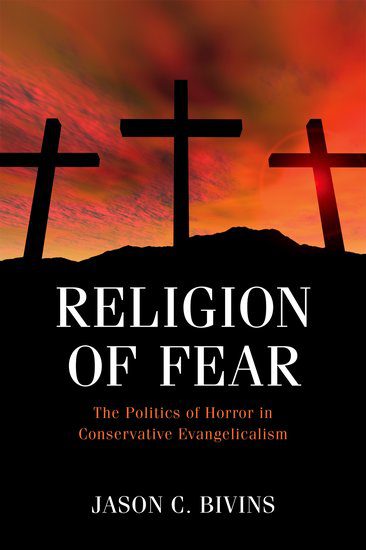
The cross was not God demanding payment. It was what happens when radical love collides with systems built on power, purity, and control. Empires crucify people like Jesus. Religious institutions silence people like Jesus. That’s the pattern of history.
But the story doesn’t end there.
The resurrection—however you understand it—is not a proof of a transaction in heaven. It’s the declaration that life cannot be crushed by violence, and truth cannot be buried by systems that depend on fear.
The point of Jesus was never about founding a religion that people had to join in order to be saved.
It was about waking people up.
Waking them up to the reality that the divine is not distant.
That love is not conditional.
That human beings are not enemies of God.
And once you see that, something shifts.
You stop living out of fear of punishment.
You stop obsessing over belief systems.
You stop dividing the world into insiders and outsiders.
You start living from love instead.
And here’s the part that unsettles religious gatekeepers the most:
You don’t actually have to be a Christian to understand what Jesus was pointing to.
You can be Buddhist.
You can be secular.
You can be agnostic or atheist.
The truth Jesus embodied—radical compassion, fearless love, the sacred dignity of every human being—doesn’t belong to a tribe.
Sometimes the people who see it most clearly are the ones who stepped outside the walls long ago.
Maybe the real act of faith today isn’t defending the old story.
Maybe it’s having the courage to let the fear-based version of Jesus die…
so the liberating one can finally be heard again.
Jim Palmer, Inner Anarchy