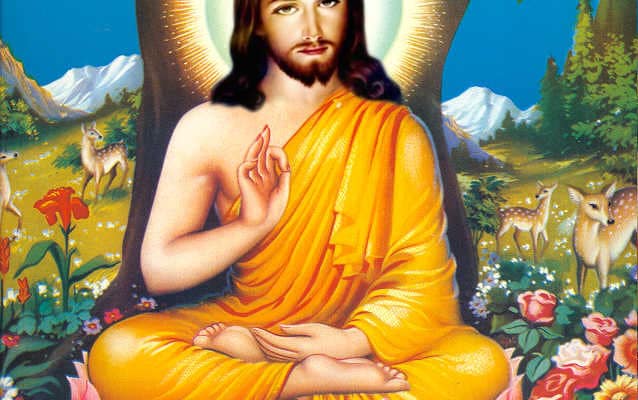
We’ve been waiting on Jesus for 2,000 years to return and save the world. We will be waiting another 2,000 years if we don’t shift our mindset. The transformation of the world is not going to fall down from the sky but lived out of our hearts.
That statement isn’t a slogan or a critique for shock value. It’s an intervention. Because if we’re honest, waiting has become one of religion’s most refined avoidance strategies. It has taught us how to turn passivity into faith and paralysis into devotion. Look upward long enough, call it hope, and you never have to face the terror of becoming fully responsible for your own life.
Waiting for Jesus to come back and fix things has never been a neutral belief. It’s a psychological system. It gives us permission to stay small, because if the real solution is external and future‑oriented, then our task is not transformation but endurance. It protects us from responsibility, because if the world is destined to collapse before divine intervention, then our failures can be reframed as inevitability rather than complicity.
And most seductively, it offers moral innocence. If Jesus is coming to set everything right, then my job isn’t to become healed, integrated, honest, or courageous. My job is simply to be on the correct side when the curtain finally lifts. Innocence becomes easier than transformation, and belief becomes a shelter from adulthood.
The uncomfortable truth is that the longer salvation is postponed, the less we have to embody it. Waiting feels holy precisely because it delays the work. And that’s why this quote cuts so deeply: the transformation of the world is not going to fall from the sky.
That idea alone destabilizes the entire rescue structure Christianity has been built around. Because if salvation doesn’t arrive from outside history, then it has to emerge within it. And that means the work can no longer be deferred, spiritualized, or projected onto a future event that conveniently never arrives.
This is where the shift happens. Not away from spirituality, but away from outsourcing. Not away from Jesus, but away from using Jesus as a way to avoid becoming human. The problem has never been faith; it’s been displacement. We’ve trained ourselves to admire rather than embody, to worship rather than integrate, to wait rather than live.
The question is no longer whether Jesus returns, but whether we ever stop using Jesus as a way to postpone the work of presence, honesty, and responsibility.
Religion has conditioned us to believe that if we just wait long enough, everything will be resolved from above. But systems built on waiting are systems that cannot learn. Every disappointment is reinterpreted as faithfulness. Every failure becomes prophecy. Every unanswered prayer becomes mystery.
That’s how guarantees protect themselves. They reinterpret contradiction as confirmation. And the cost of this is enormous: entire lives spent preparing for a future that never arrives, while missing the only place transformation has ever been possible—the present.
Shifting our mindset is not about positive thinking or empowerment rhetoric. It’s about existential adulthood. Adulthood begins when you no longer need guarantees in order to live responsibly. When you stop asking for metaphysical insurance before you act. When you accept that waiting for God can be a deeply religious way of refusing grief, refusing repair, refusing the slow, humiliating work of becoming honest. Adulthood is realizing that if the world is going to change, it will change because people change—locally, imperfectly, relationally, and without cosmic backup.
If salvation doesn’t fall from the sky, then what is it? It isn’t rescue. It’s integration. It’s the end of inner division—spiritual language on the surface, anxiety underneath; forgiveness in theory, resentment in practice; trust in God outwardly, control inwardly. It’s the moment you stop treating your wounds as spiritual failures and start treating them as human realities that require care rather than belief.
It’s the shift from asking “What do I believe?” to asking “How do I show up?”—in conflict, in love, in power, in money, in grief, in responsibility. The world does not change through correct theology. It changes through embodied people.
The most heretical truth here is also the most obvious: if we keep waiting for Jesus to return and save the world, we will keep waiting, because the system has trained us to desire rescue more than responsibility.
But if we stop waiting, something else becomes possible—not a world without God, but a world without outsourcing. A spirituality that no longer looks upward for intervention but inward for transformation, not as self‑worship, but as the acceptance that no one is coming to save us from the human condition.
That doesn’t mean anything goes. It means nothing absolves. And that is where real change begins. Because when you finally accept that nothing is coming to rescue you, you stop trying to escape your life. You start living it—with presence instead of projection, responsibility instead of hope deferred, care instead of cosmic expectation. Not with belief. Not with negation. But with embodiment. That is the shift.
Jim Palmer, Inner Anarchy
Read IA-> https://tinyurl.com/2urhvn8c